Mandolin
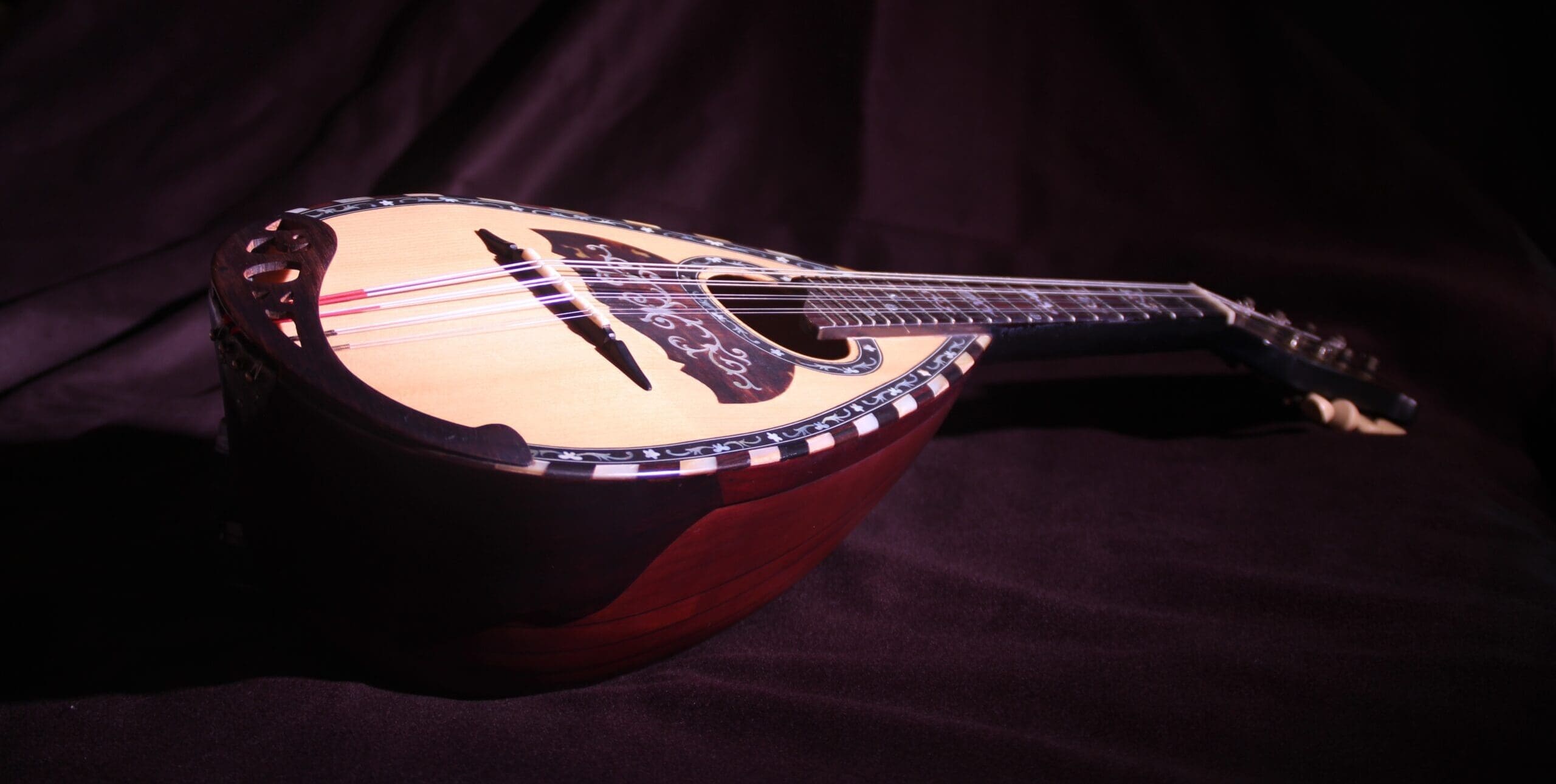
The Mandolin is a stringed instrument that traces its origins to Italy, with its earliest versions dating back to the 17th century. Traditionally featuring eight strings in pairs, it is played with a plectrum and is known for its bright, crisp sound. While it has roots in Western classical music, the Mandolin has been embraced by musicians worldwide, including in Indian classical music, where it was adapted and popularized in the Carnatic tradition. The instrument’s ability to produce rapid, melodic phrases and its bright timbre make it an ideal complement to both solo and ensemble performances.
In Indian classical music, the Mandolin was popularized by U. Srinivas, who is credited with transforming it into a prominent instrument in the Carnatic genre. He adapted the instrument to suit the subtleties of Indian music, creating a unique voice for the Mandolin that blended beautifully with the intricate rhythms and melodies of Indian classical compositions. His innovative approach and mastery of the instrument inspired many contemporary Mandolin players, including Sriram Shriananda, who has carried the legacy forward by incorporating his own expressive style and virtuosity.
At the Darbar’s St-Martin-in-the-Fields concert series in June 2023, Sriram Shriananda performed a mesmerizing recital on the Mandolin, showcasing his deep understanding of Carnatic music while infusing the performance with his distinctive flair. His performance was a testament to the versatility of the Mandolin, highlighting its adaptability to Indian classical music and its ability to create intricate melodic lines. Through his performance, Shriananda continues to bring new life to the Mandolin, ensuring its continued presence and evolution in the Indian classical music scene.
Darbar believes in the power of Indian classical music to stir, thrill, and inspire. Explore our YouTube channel or subscribe to the Darbar Player to watch extended festival performances, talks, and documentaries in pristine HD and UHD quality.