It is widely acknowledged that this beautiful raga was invented by Ustad Allauddin Khan and popularized by his legendary disciple Pandit Ravi Shankar. Many believe that this is a melodious variation of a traditional raga Bhinna Shadja.
Thhaat (parent scale)
Bilawal
Jaati:
Audav Sampoorna (five notes in ascent and seven in descent)
Vaadi:
Madhyam (M)
Samvaadi:
Shadja (S)
Swaras:
Omits Rishabh and Pancham (R and P) in ascending order, all shuddh swaras
Aaroh (ascent):
N.S D.N. S G M, M D N S’ (Western notation: B C A B C E F, F A B C )
Avaroh (descent)
S’N D P M G M R S (Western notation: C B A G F E F D C )
Key phrases:
S G M, M G M D, D N S’, N D, D P M , M D S’, N D P M G R S, D.N. S M, G M D N S’, N D P M G R S
Time:
Night
According to musicians its aroha resembles Rageshri anga and avaroha has a shadow of Hem Kalyan. Others say that this blends Rageshri and Malgunji.
Bibliography
1. The Raganess of Ragas by Deepak Raja
2. The Oxford Encyclopaedia of the Music of India
Links
1. Pandit Ravi Shankar (sitar)
2. Pratik Srivastava (sarod)

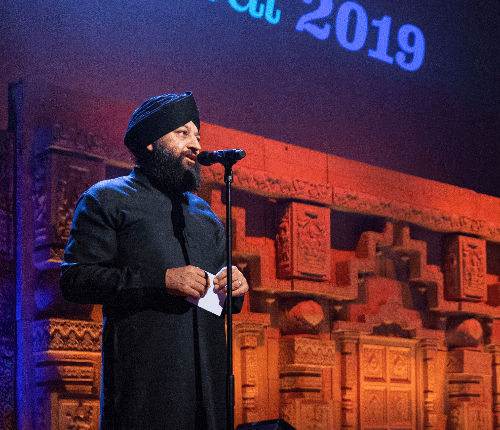
Praashekh and Abhishek Borkar perform a sarod duet in Raag Hemant with Parimal Chakraborty (tabla) at Darbar Festival 2019.
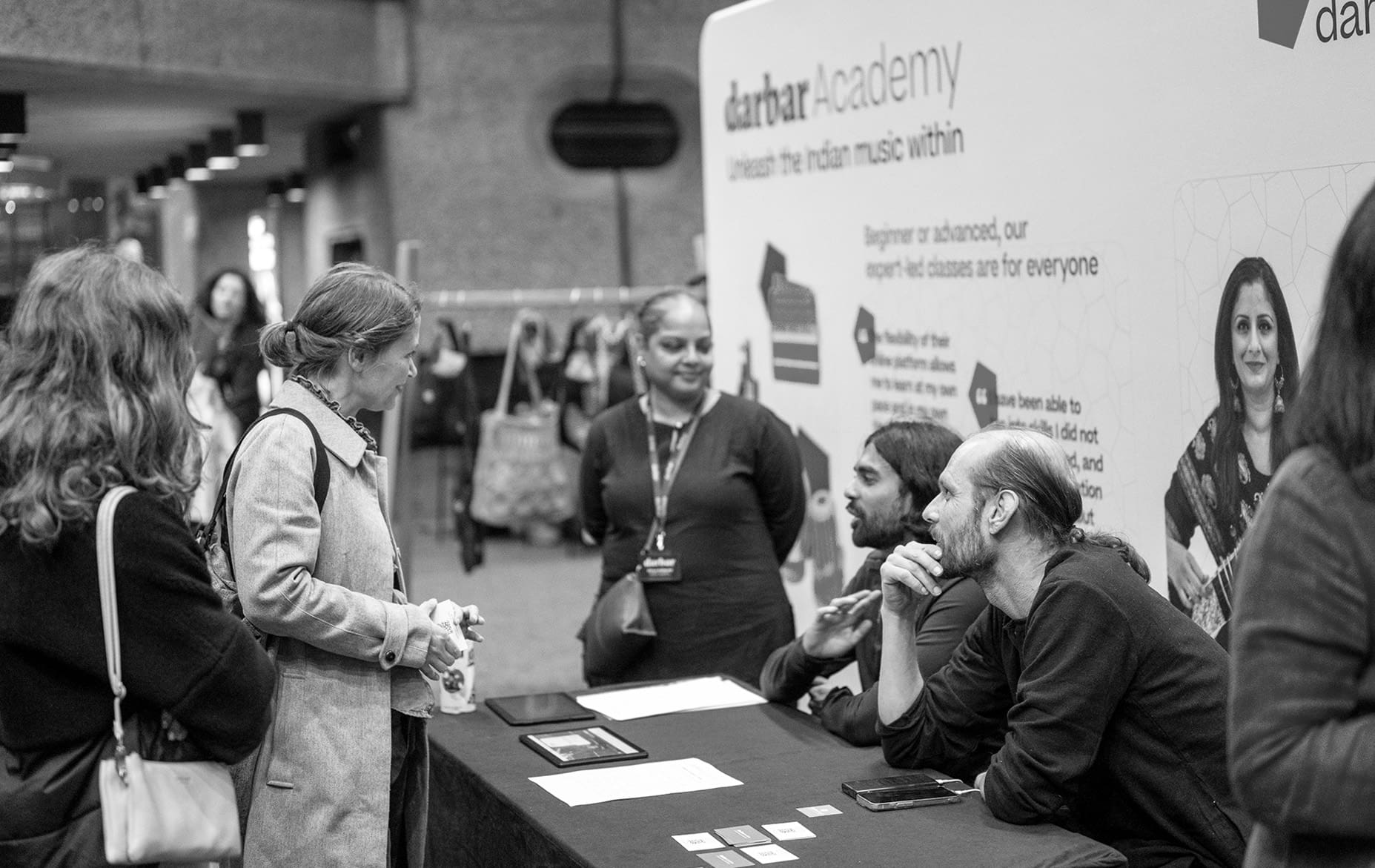
Explore our Academy Courses
Explore all our live and on-demand music courses guided by world-class maestros. From beginners taking their first steps to advanced students refining their craft, our globally accessible platform empowers you to learn, grow, and connect deeply with the tradition of Indian classical music
Trending on YouTube
Visit our YouTube channel to see a huge range of our content archive