This raga has similar features like the famous raga Bhoopali and yet it maintains its own character.
Thhaat (parent scale)
Kalyan
Jaati:
Audav (pentatonic)
Vaadi:
Pancham (P)
Samvaadi:
Shadja (S)
Swaras:
Omits Madhyam (M) and Nishad (N); rest shuddh swaras
Aaroh (ascent):
S R G P D S’ (Western notation: C D E G A C)
Avaroh (descent)
S’ D P G R S (Western notation: C A G E D C )
Key phrases:
S, G P R, S, S R S, S S P G P, P, P D G, P D P R, S S R S, P.S R S, G P, P, P D G, P P S’, S’,R’S’, S’D S’, R’S’P, G P D S’, P, P D G
Time:
Night (before midnight)
Despite its similarity with Bhoopali, this raga has a different gait which is focused on its Vaadi Pancham (P). The frequent application of G-P in ascent and D-G in descent keeps it apart from Bhoopali. Some musicians perform this raga under Marwa parent scale (with Komal Rishabh). But Jait Kalyan with Shuddh Rishabh is more popular.
Bibliography
1. Bhatkhande V.N. (1919-1937) ‘Kramik Pustak Malika Vol 1-6’
2. The Oxford Encyclopaedia of the Music of India
Links
1. Vidushi Kishori Amonkar (vocal)
2. Pandit Niveruttibua Sarnaik (vocal)
3. Pandit Mallikarjun Mansoor (vocal)
4. Vidushi Ashwini Bhide-Deshpande (vocal)

Manjiri Asanare-Kelkar (khayal vocalist) presents Raag Jait Kalyan.
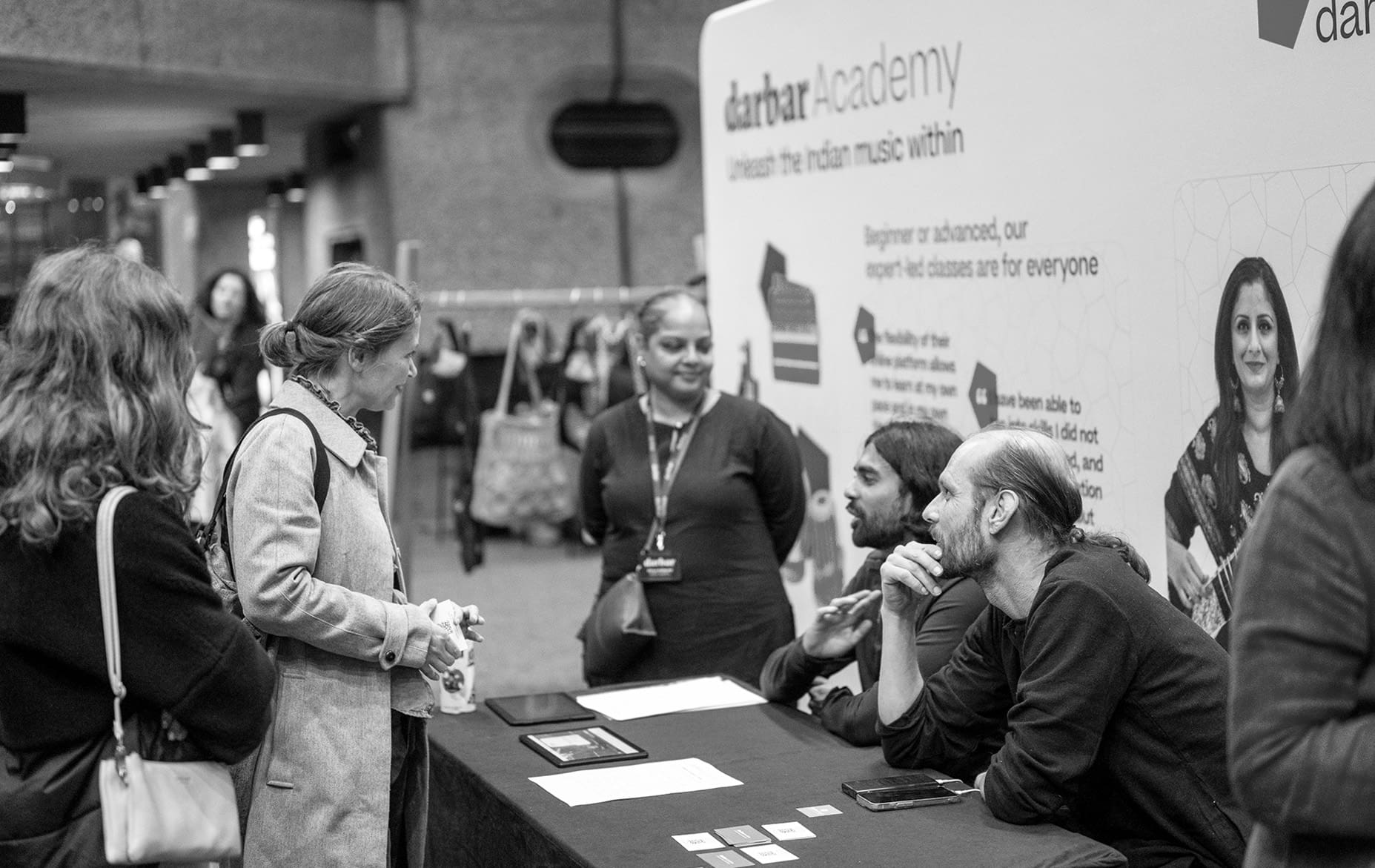
Explore our Academy Courses
Explore all our live and on-demand music courses guided by world-class maestros. From beginners taking their first steps to advanced students refining their craft, our globally accessible platform empowers you to learn, grow, and connect deeply with the tradition of Indian classical music
Trending on YouTube
Visit our YouTube channel to see a huge range of our content archive