Grouped under Kalyan Thhaat, this popular raga is known for its meandering gait.
Thhaat (parent scale)
Kalyan
Jaati:
Audav (5-notes) – Sampoorna (7-notes)
Vaadi:
Shadja (S) or Rishabh (R)
Samvaadi:
Madhyam (M) or Pancham (P)
Swaras:
Both Madhyams, rest all shuddh
Aaroh (ascent):
S R m P N S’ (Western Notes: C D F# G B C)
Avaroh (descent)
S’N D P, m P, MR, G N. S (Western Notes: C B A G, F# G, F D, E B C)
Key phrases:
MR, N.S, RmP, m D P, DmP, GMP, GMR, N.SR, N.S, RmPN, S’NDP, DmP, RmPDmP, GMP, GMR, N.S
Mood
Romantic
Time:
Evening
The missing Dhaivat in the ascent and the application of both Madhyams with deviously applied Gandhar make this raga very interesting. The emphasis on R-P is the logical reason of the difference of opinion regarding its Vadi-Samvadi. Since this raga has shades of Hameer, Kedar, Gaud Sarang and Kamod, many believe that this is a blend of all these ragas. As such, its complex movements demand careful handling.
Bibliography
1. Bhatkhande V.N. (1919-1937) ‘Kramik Pustak Malika Vol 1-6’
2. Abhinav Geetanjali (Vol 1) by Pandit Ram Ashreya Jha ‘Ramrang’
Links
1. Ustad Vilayat Khan (sitar)
2. Vidushi Prabha Atre (vocal)
3. Ustad Rashid Khan (vocal)
4. Ustad Amjad Ali Khan (sarod)

Anupama Bhagat plays Raag Shyam Kalyan on sitar, at Darbar Festival 2013, with Gurdain Rayatt (tabla).
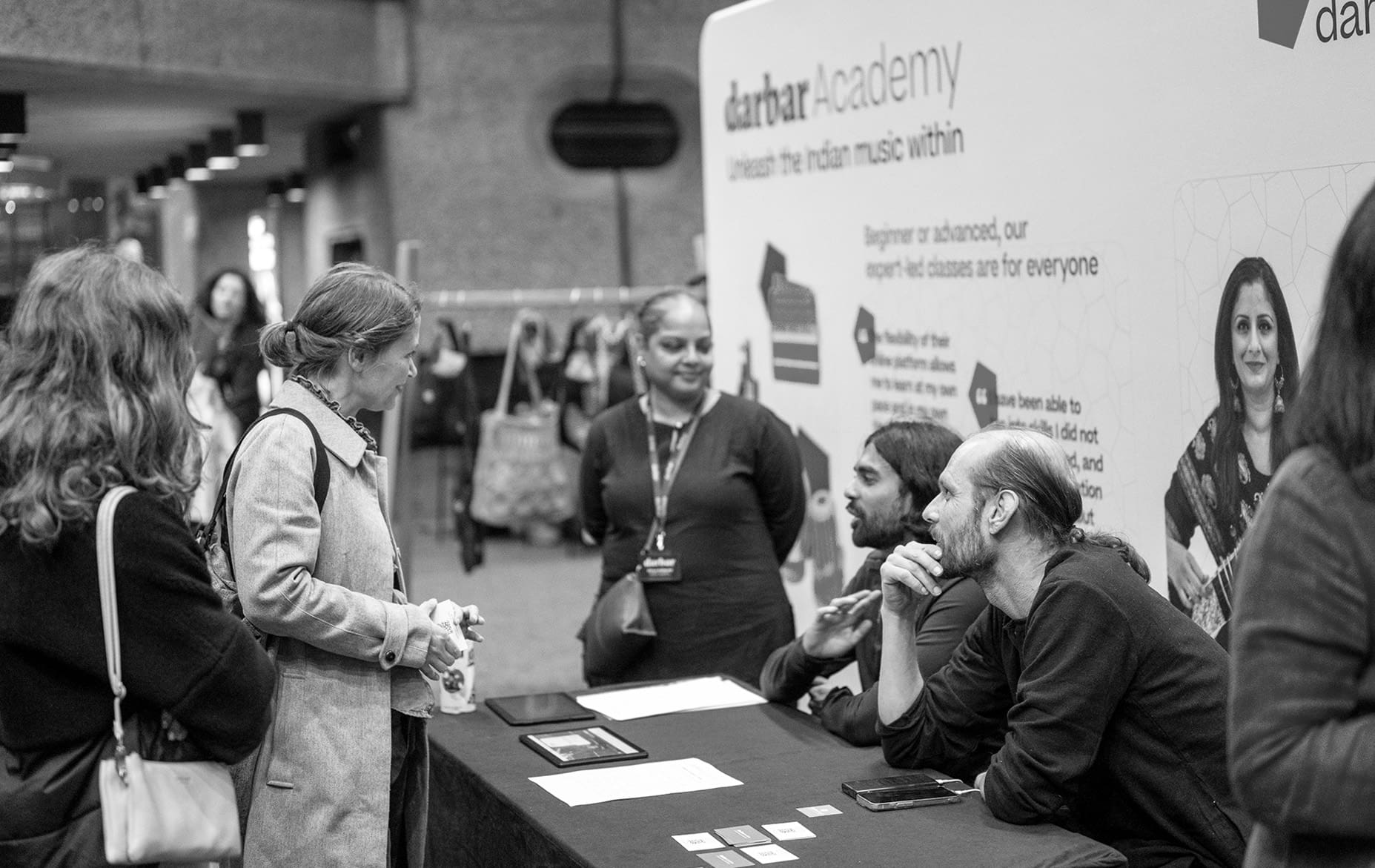
Explore our Academy Courses
Explore all our live and on-demand music courses guided by world-class maestros. From beginners taking their first steps to advanced students refining their craft, our globally accessible platform empowers you to learn, grow, and connect deeply with the tradition of Indian classical music
Trending on YouTube
Visit our YouTube channel to see a huge range of our content archive