Varāḷi is an upāṅga janya1 of the 39th mēḷakarta2 Jhālavarāḷi. It is a vakra sampūrṇa-krama sampūrṇa3 rāga. The svaras4 occurring in this rāga are ṣaḍja, śuddha riṣabha, śuddha gāndhāra, prati madhyama, pañchama, śuddha dhaivata, kākali niṣāda5. Its ārōhaṇa6 and avarōhaṇa7 are
S G1 R1 G1 M2 P D1 N3 Ṡ – Ṡ N3 D1 P M2 G1 R1 S.
In terms of Western notes, if C is taken as the base, then the scale is
C D C# D F# G G# B C – C B G# G F# D C# C
It is an ancient rāga. It is one of the ghana pañchaka rāgas. It offers ample scope for improvisation. Gāndhāra, madhyama are rāgachāyā svaras8. Gāndhāra and dhaivata are nyāsa svaras9. Madhyama is higher than usual and is often called Varāḷi madhyama. It can portray rasas10 like karuṇa (compassion) very effectively, just as it can convey the feeling of devotion or bhakti bhāva.
Some of the signature phrases of this rāga are
P, M D P M G G,,, R S R G, R, – S Ṇ Ḍ Ṇ, Ḍ P ̣ Ṃ,- Ḍ Ṇ S R G, R S Ṇ – S G R G M P D P,,,, D N M, N, D, – P D N Ṡ Ṙ Ṡ, Ṙ N Ṡ, – Ṡ N D, Ġ, Ġ Ṙ Ṙ, Ṙ Ġ, Ṙ, – Ṡ Ṗ Ṁ Ġ, Ṙ Ṡ N – N Ṡ Ṙ Ġ Ṙ Ṙ Ṡ N – D N Ṙ Ṙ Ṡ N D P M, – G, M, D, N, D P M G, – P M G,,,, G R R,,,, S – Ṇ S R G R S Ṇ Ḍ Ṇ Ṃ Ḍ Ṇ, S,
A few compositions in this rāga are-
Tāmarasākṣi (varṇam)
Tiruvoṭṭiyūr Tyāgayyar
Vanajākṣi (varṇam)
Rāmanāthapuram Śrinivāsa Iyengār
Ēṭi janma
Tyāgarāja
Kanakanaruchira
Tyāgarāja
Marakatamaṇivarṇa
Tyāgarāja
Māmava mīnākṣi
Muttuswāmi Dīkṣitar
Karuṇa jūḍavamma
Śyāmā Śāstri
Kāvāvā
Pāpanāsam Sivan
Footnotes
1 A derived rāga which has notes only from its own parent rāga.
2 Parent rāga
3 Vakra-Sampūrṇa- A scale that has all 7 notes, but not in their usual order. Krama-sampūrṇa- A scale that has
all 7 notes in the proper order. Vakra sampūrṇa-krama sampūrṇa is a scale with 7 notes not in the usual order
in ascent and 7 notes in the proper order in descent.
4 Notes
5 There are 16 varieties of svaras in Carnatic music. They are
Sa (ṣaḍja)
ṣaḍja
Ri (riṣabha)
śuddha riṣabha
chatuśruti riṣabha
ṣaṭśruti riṣabha
Ga (gāndhāra)
śuddha gāndhāra
sādhāraṇa gāndhāra
antara gāndhāra
Ma (madhyama)
śuddha madhyama
prati madhyama
Pa (pañchama)
pañchama
Da (dhaivata)
śuddha dhaivata
chatuśruti dhaivata
ṣaṭśruti dhaivata
Ni (niṣāda)
śuddha niṣāda
kaiśiki niṣāda
kākali niṣāda
6 Scale in ascent
7 Scale in descent
8 Notes which most effectively bring out the mood of the rāga
9 The landing notes for elaboration in various stages during improvisation.
10 Emotions or moods.
Bibliography
Hariharan, M. and Kuppuswamy, Gowri. 2011. Comparative Music- Fundamentals of Western Music. Nagercoil: CBH Publications
Keshavamurthy, R.R. 1964. Rāgalakṣaṇa mattu Rāgakōśa. Bengaluru: Gāna Viśārada Biḍāram Kṛṣṇappa Smāraka Saṅgīta Vidyālaya
Rajarao, Mysore L. 2003. Saṅgīta Śāstra Chandrike. Bengaluru: Karnataka Sangeetha Nritya Academy
Rao, B. Subba. 1980. Raganidhi. Madras: The Music Academy
Sambamoorthy, P. 2018 (reprint of eighth edition published in 1998). South Indian Music (Volumes 1 to 6). Chennai: The Indian Music Publishing House
Vasantalakshmi, R. 2007. Karnāṭaka Saṅgītaśāstra vāhini. Mysore: Bharathi Prakashana
Audio Links:
- Bharat Sundar (vocal)
- Dr. M Balamuralkrishnan (vocal)
- Spoorthi Rao (vocal)
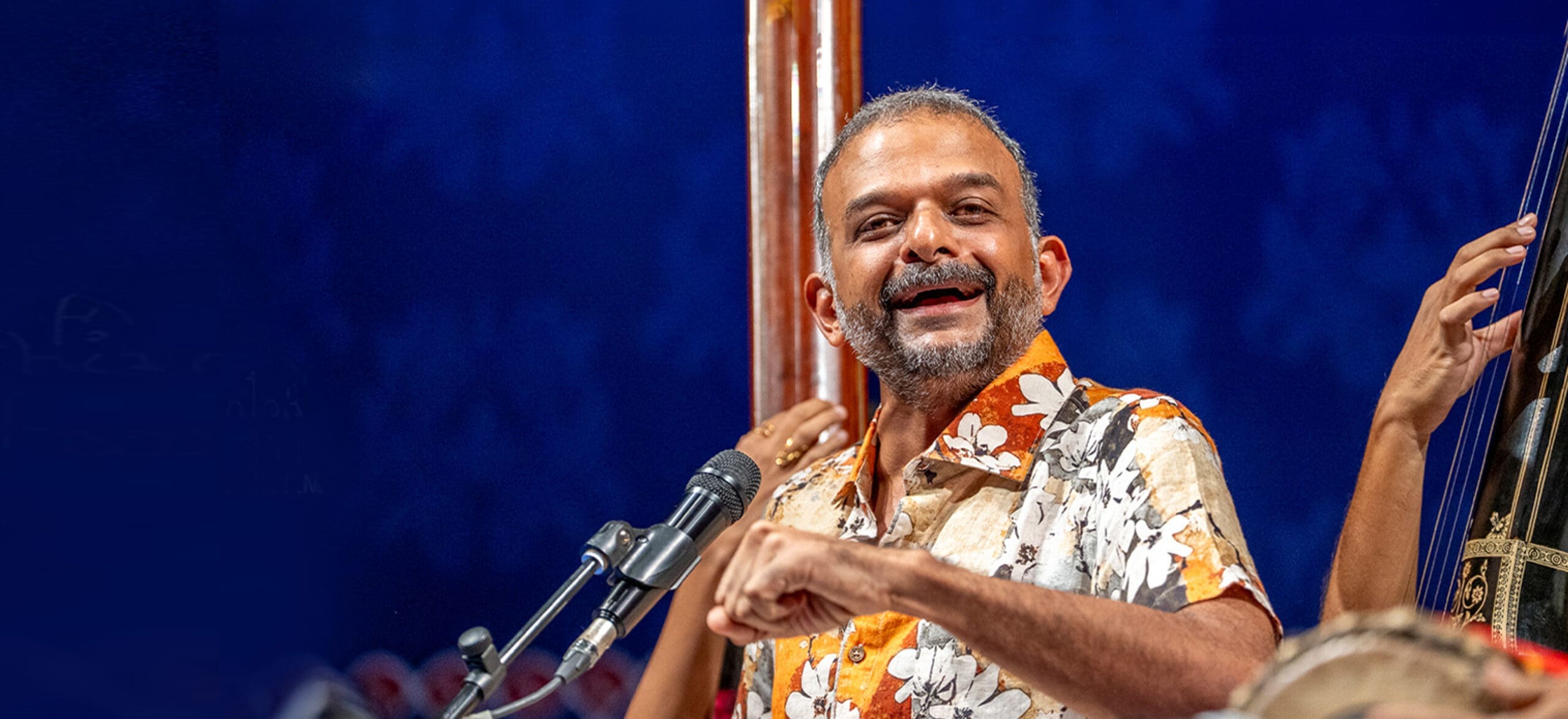
TM Krishna presents a carnatic vocal performance of Raga Varali, recorded in Mumbai, Maharashtra, India.
Explore our Academy Courses
Explore all our live and on-demand music courses guided by world-class maestros. From beginners taking their first steps to advanced students refining their craft, our globally accessible platform empowers you to learn, grow, and connect deeply with the tradition of Indian classical music
Trending on YouTube
Visit our YouTube channel to see a huge range of our content archive