Virtual Gurus? Taking a closer look at teaching Indian classical music online

Can ancient tradition be effectively passed on via Zoom?
Recent years have seen a surge in digital innovations surrounding online Indian classical music education. Can the tradition keep up, and will this ever be an authentic substitute for hard-won experience?
For generations, the intricate artistry of Indian classical music was handed down through the hallowed guru-shishya tradition, a teacher-student sacred bond that enriched the lives of disciples under the watchful eye of their mentors.
Musicians express the intense dedication required to master the depth of Indian classical music – often more than 10 hours of dedicated practice a day. They relay the transformative power of the guru-shishya tradition, where personal interactions, emotional connections and immediate feedback form the bedrock of musical learning. However, there are also there are common threads of sacrifice, rigorous struggle and self-effacing devotion to their gurus. Musicians would regularly spend 10 or more hours a day in dedicated practice and many talk of oneof one lifetime not enough for learning this art form
That great art somehow necessitates great hardship is something we’ve come to regard as a universal truth. There’s a certain discipline to the journey, an intense singularity of focus that effaced much else. For decades if not centuries, the sanctity of the dedicated guru-shishya tradition seemed an essential ingredient for classical music success.
The meeting host will let you in soon
With such venerated and somewhat mystical origins, it seems a bit incongruous when the tradition shifted – particularly during and after the COVID-19 pandemic lockdowns – to online platforms like Skype, Teams, Zoom or even WhatsApp. That something once so mythical and celestial in origin became so accessible was both liberating and unexpected.
In many ways, the tradition has been obscured by being largely orally preserved. If you knew, you knew. And if you didn’t, it would take getting an in with a gharana (school of music) or elusive guru to start your journey.
Musicologist Richard Widdess put into context the difference between Indian and Western classical music attitudes: “Indian music is dependent to a large extent on oral transmission, memorisation and improvisation; and although these processes may be assisted by various systems of ‘oral notation’, for drums, dance and melody, these oral systems serve a mnemonic function, and are seldom written down. Scholars of Indian music rarely consider them as falling into the category of ‘notation’, or meriting serious consideration as such.” Essentially, the western belief was that memory is short-term, limited in capacity, and treacherously fallible, whereas writing was comparatively long term and reliable. The opposite found credence in India – collective memory could transmit a complex tradition with astonishing accuracy over centuries, whereas writing was perishable and lead to corruption, forgetfulness, or misuse, Widdess explained.
To condense such a sprawling compendium of knowledge not just to a learning resource but also to the confines of a screen must have seemed an impossible task even a few years ago. Yet, here we stand, in the throes of a digital renaissance that Darbar has been pioneering in many ways.
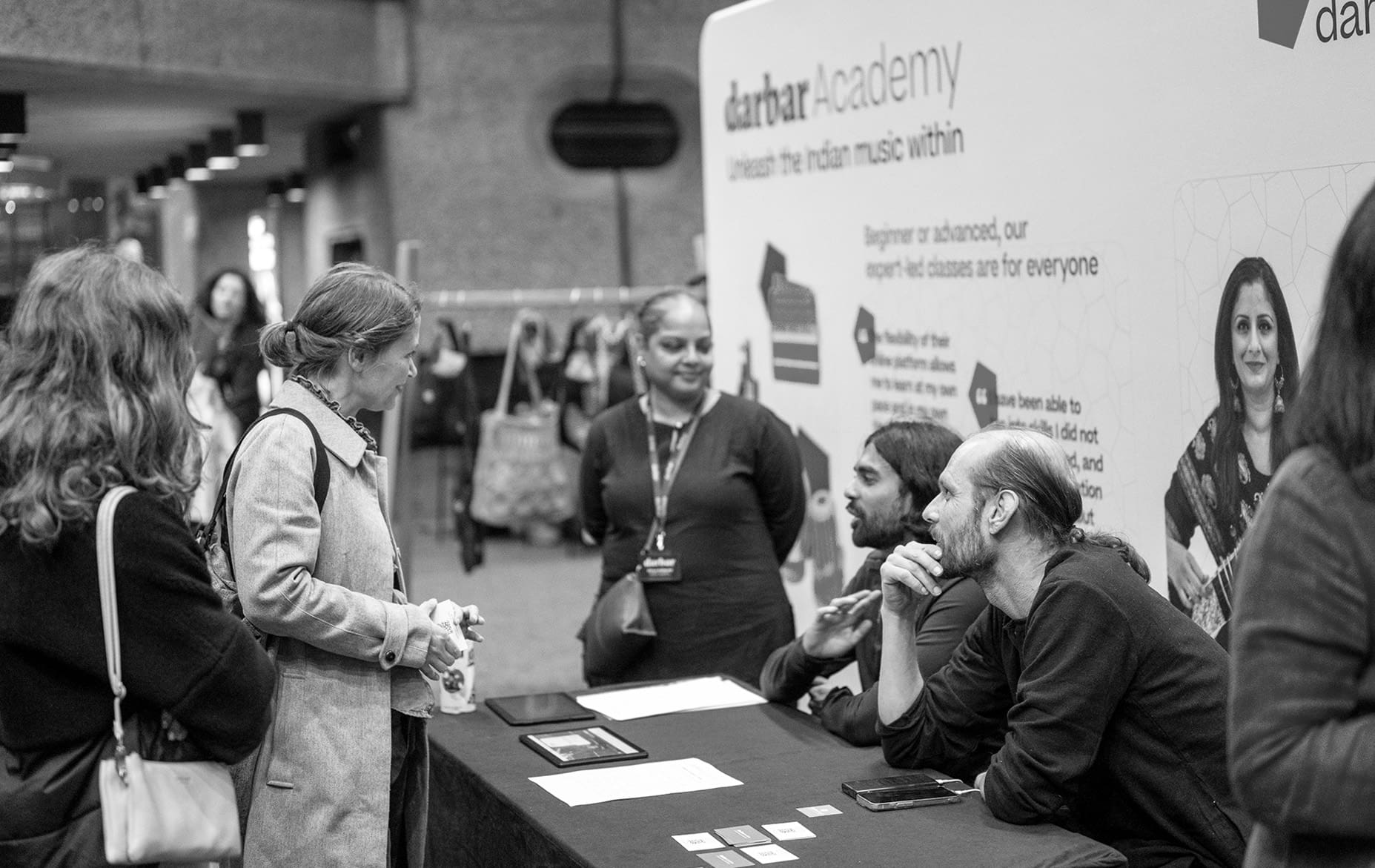
The Darbar Academy has emerged as a trailblazer, boldly navigating the intersection of tradition and innovation. Since its inception in 2007, Darbar has championed the cause of democratising access to Indian classical music for global audiences. With its pioneering efforts, Darbar introduced the world to a novel approach of learning and preserving this centuries-old art form. Establishing the organisation’s flagship event, the Darbar Festival itself was a groundbreaking move that combined the allure of live performances filmed to provide online content, setting the stage for Darbar Academy’s later innovations in online education. Offering virtual masterclasses, workshops and courses, this digital platform for learning not only bridged physical distances but also opened new avenues for engaging with Indian classical music’s intricacies and wisdom. Students receive an expansive array of resources, from instructional videos to interactive modules, to enrich their learning experience.

Today, Indian classical music education has moved, in large part, to online platforms and virtual environments. This new era breaches geographies and brings maestro/as to our fingertips. It’s a grand crescendo that has forever redefined the guru-student synergy. Multimedia resources are seamlessly incorporated, providing widespread access to quality instruction regardless of time-zone constraints.
By technological standards, the experience is immersive and highly sophisticated. But by artistic standards, but is it enough?
The serenade of innovation
Imagine a young tabla enthusiast in Chicago, his fingers tapping in sync with a virtuoso in Mumbai. Through the veil of cyberspace, the essence of raga and tala fuses, transcending time zones and summoning cultural connections that defy distance. This is the allure of virtual classrooms—a harmonious blend of the classical and the contemporary.
With the digital baton in hand, the advantages of online Indian classical music education unfurl like a panoramic raga. The global reach of these virtual teachers paint a canvas where eager learners from Tokyo to Toronto can join the symphony. The melodies of Indian classical music, once confined within geographical boundaries, now swirl in an endless global duet, nurturing cross-cultural harmony.
Flexibility takes centre stage as the virtuosos of the internet allow students to harmonise their learning with their life’s concerto. A software engineer in Bangalore can now fine-tune his singing skills between codes and coffee, proving that passion need not bow todistance. With Darbar’s Academy classes, the digital manuscript is generous, providing learners with a treasure trove of resources—pre-recorded lessons, practice regimens and interactive quizzes—each note a stepping-stone on their musical pilgrimage.
And it’s a pilgrimage they can theoretically undertake without ever stepping out of their house.
Once confined to dimly lit guru ashrams and echoing music halls, the corridors of musical wisdom have expanded into the vast digital landscape. The symphony of technology now orchestrates an ensemble of students and gurus, each note carried across oceans and mountains through the magic of ones and zeros.
It is as if the sitar’s strings reverberate not just with the touch of its player, but the pulse of the entire world.
Teaching through a screen
Though the pandemic didn’t begin the digital learning movement in Indian classical movement, it definitely expedited and accelerated it.
Research from 2017 was already pointing out shifts in the learning process, from purchasing instruments online to electronic tablas with myriad taals to practice. “From [the] gramophone, rpm records, radio, Compact Disc (CD) to mobiles applications, YouTube, iTunes to electronic and robotic instruments [IX] the use of technology is increasing day by day in Indian classical music adding more updated versions with the changing times…Almost everything of entertainment is completely digitised in the present generation,” write the study authors.
But the lightning speed at which the teaching legacy pivoted online during the pandemic has little parallel. Like the massive boom in EdTech, Indian classical music – and musicians – shifted online. Research and common sense alike reveal that it was a shift necessitated as much by financial survival as well as ensuring the art form had an enduring legacy. Without live concerts, many artists found their incomes dwindling and supplemented generously with online classes. And with social distancing measures in place, students’ only option was to turn to online learning.
“The harsh repercussions of COVID-19 jolted the ways in which human beings functioned. Survival in itself became a mammoth task for many and livelihoods were destroyed to a great extent. These tough times had severe implications in the world of Indian Classical Music. Indian Classical Music and musicians faced severe unprecedented times, wherein survival of many in itself seemed bleak. The loss of some very renowned artists came as a shock to the entire fraternity,” explains DR. Gagandeep Hothi, Assistant Professor at the Department of Music, D.S.B. Campus, Kumaun University, Nainital, Uttarakhand.
A less obvious reason behind this boom, though, is the desire of many to reach for familiarity, comfort and a taste of home during these challenging times. ‘Turning inward’ or going ‘back to basics’ was a sentiment with great resurgence and popularity during a period fraught with uncertainty and compromised wellbeing. Like reaching for grandma’s familiar recipes, home-cooked food, simple activities and seeking connection with a tapestry of loved ones and well-known rituals, one of the reasons so many more students turned to Indian classical music during the COVID-19 pandemic may have been to feel comfort and belonging. “The very aim of Indian Classical Music is to provide peace, joy and solace to the mind,” wrote Hothi.
In a world that suddenly felt disconnected, people across the globe found solace in the embrace of art forms that carry within them the whispers of centuries. This is where Darbar Academy’s vision aligned seamlessly. By providing an online sanctuary for learners to immerse themselves in the melodies of tradition, the Academy played a pivotal role in not only imparting musical knowledge but also fostering a sense of connection and belonging. It has been a fruition of the holistic art form’s intrinsic purpose – offering respite, serenity, and a reassuring reminder of the enduring beauty that transcends the tumultuous currents of the world – a reminder that there is an internal and universal rhythm we can step into once again.

Persisting inequalities and challenges
Yet, even as the digital symphony reaches a crescendo and many more players join the movement, a shadow of challenges has lingered.
The screen, though a portal to the maestro’s expertise, falls short in capturing the nuances of personal interaction. The traditional guru-disciple relationship, which relies on personal guidance and immediate feedback, may be compromised in the digital realm. The guru’s knowing gaze, the slight shift of posture – these subtleties, like whispered secrets, often elude the virtual realm. In fact, similar research about students’ perceived utility in other music domains points out the disconcerting lack of contact, highlighting issues such as “…video and audio quality because of the platforms or the quality of personal devices, lack of physical proximity and eye contact,” as detrimental to overall effectiveness.
The artistry of Indian classical music especially, rooted in intricate hand movements and posture, yearns for face-to-face guidance which technology struggles to emulate. An Indian classical music lesson is unlike any other. “Traditionally, before starting a lesson, the shishya touches the feet of the guru and seeks blessings. The entire process of learning is deemed to be very sacred, spiritual and divine,” Hothi explained.
Online classes were rarely a perfect substitute for face-to-face lessons. Though parents recognised the merits of an online learning environment, in a qualitative research focusing on a New Jersey based Bharatnatyam dance school, nearly all parents perceived their children to be more attentive, disciplined and time-aware in face-to-face classes.
Furthermore, technical glitches sometimes echo like a dissonant note. The haunting spectre of audio lag or pixelated visuals can interrupt the rhythm of a lesson, leaving both student and guru grappling with the discordance of a digital duet out of tune.
There’s also an inherent risk of worsening inequities. The same musicians whose livelihood was most severely impacted during the pandemic may have had least access to the skills and infrastructure required to pivot. The students from the remotest areas who found journeying to their guru’s residence hardest may have had the faultiest broadband connections.
Beyond technical constraints is the heart of the content and curriculum itself. Workshops and having access to well-established artists pulling back the curtain on their craft is a wonderful resource. Many students benefit from the feeling of humanised artists and access to the thoughts and sentiments of maestros and maestras they have often looked up to from afar. The technological shift has enabled greater access in many ways, with workshops, lecture-demonstrations, livestreams and speaker sessions.
Yet, it stands to reason that such initiatives make the advanced more competent without helping beginners thrive. “Advanced learners benefited from them [such workshops] immensely as they were well versed with the involved minute intricacies. The same was not true for beginners who need a lot of personal attention regarding the grasping of vivid aspects of Indian Classical Music,” posited Hothi.
Since Indian classical music is a deeply intricate and culturally rooted art form built on centuries of tradition, personal mentorship, and the unspoken nuances of face-to-face interactions, learning this art form purely online can potentially dilute the essence and authenticity that thrives in the physical presence of a guru, as well as hinder the transmission of subtle musical nuances. The absence of direct interaction can result in a fragmented learning experience, potentially leading to a shallow understanding of the art’s complexities.
While online learning offers convenience and accessibility, Indian classical music experiences unique challenged, making the quest to strike a balance between the digital and traditional realms for a truly holistic learning experience even more important.
Democratising access to the art form
That doesn’t mean it’s impossible.
Amidst the discourse surrounding the limitations of online learning in the realm of Indian classical music, it’s important to acknowledge while these concerns hold merit, there are instances where technology is a catalyst for musical growth.
Darbar Academy, a trailblazer in the domain of online music education, offers compelling testament to the potential of technology to enhance, rather than dilute, the experience of learning and practicing Indian classical music online. By seamlessly merging tradition with innovation, Darbar Academy has reimagined the boundaries of virtual learning, defying the notion that technology must inevitably erode the essence of this ancient art form.
Thoughtful design means that with a commitment to preserving the core values of Indian classical music, the digital landscape can indeed become a meaningful and transformative avenue for musical enrichment.
Technology, when wielded thoughtfully, can amplify the resonance of traditional art forms. Through its innovative online platform, Darbar Academy offers a gateway to the enchanting realm of Indian classical music, allaying concerns about the loss of the human touch in this intricate art.
While sceptics might argue that the absence of physical presence could hinder the personalised guidance necessary for mastering the nuances of raga music from India, Darbar Academy employs cutting-edge technologies to mitigate these challenges. The platform fosters direct interaction between students and revered musicians, simulating the intimate one-on-one guidance that is the hallmark of the traditional guru-shishya tradition. This technological marvel isn’t about replacing the guru, but about leveraging technology to make the guru accessible to a global audience.
An exemplar of this approach is the vocal course conducted by the esteemed vocalist, Indrani Mukherjee. With her rich musical heritage and scholarship from the renowned ITC Sangeet Research Academy, Mukherjee’s expertise transcends geographical boundaries. The eight-week course offered a structured learning and practice plan, enabling students from diverse backgrounds to unravel the intricacies of the raag and immerse themselves in the world of melody. Darbar Academy embraces technology as an enabler, rather than a limitation, as it bridges gaps between cultures and connects students of varying musical backgrounds.

The Academy’s emphasis on inclusivity is apparent in the diversity of its students, including those who had previously been unable to engage in traditional classroom settings. Darbar Academy’s digital realm allows retirees to rediscover their passion for Indian music, parents to provide their children with top-quality music education, and even Western musicians to explore the depths of the Indian raga system. The versatility of the courses extends beyond borders, fostering a global community of music aficionados united by their love for Indian classical music. It is the next phase in a mission to bring the magic of Indian classical music to growing audiences, regardless of where on the globe they may be.
Digital workshops, too, seamlessly blend the old and the new, preserving the essence of human touch while harnessing the power of the virtual medium. Darbar regularly presents uncut concert hall footage, webinars, livestreams, lecture-demonstrations, question and answer sessions and full-length interviews.
By delivering education that is both convenient and enriching, a path is forged for learners to embark on an enchanting journey into the heart of Indian classical music, right from the comfort of their homes. It’s testament to the fact that while online learning has its limitations, platforms can transcend those limitations to create meaningful and transformative musical experiences. They can respect tradition while allowing the art form to evolve in harmony with the modern world.
As the sun sets on the traditional horizon and the digital dawn rises, a new raga emerges – an ode to the future of Indian classical music education. The guru-student dynamic, once confined by geography, now dances between realms, creating a harmony that transcends borders and time zones.
In this digital saga, innovation and tradition meld, creating a symphony where gurus are no longer confined by the four walls of their music chambers.
These virtual gurus embracethe past, conduct the present and compose the future. The notes of this journey may be beautifully imperfect – like the resonance of a handmade instrument – but just like the art form, they will echo indefinitely.