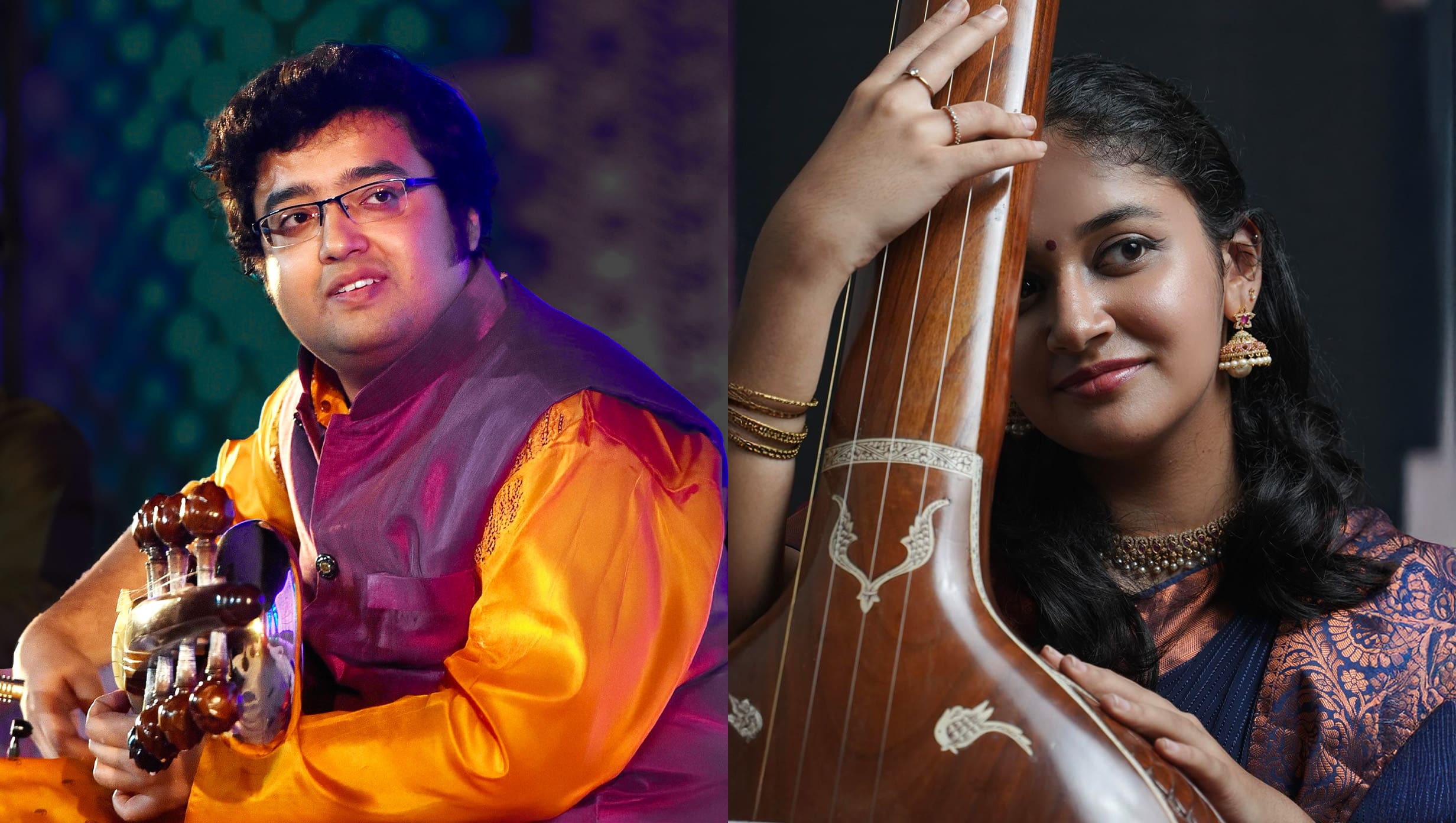
Debanjan Bhattacharjee
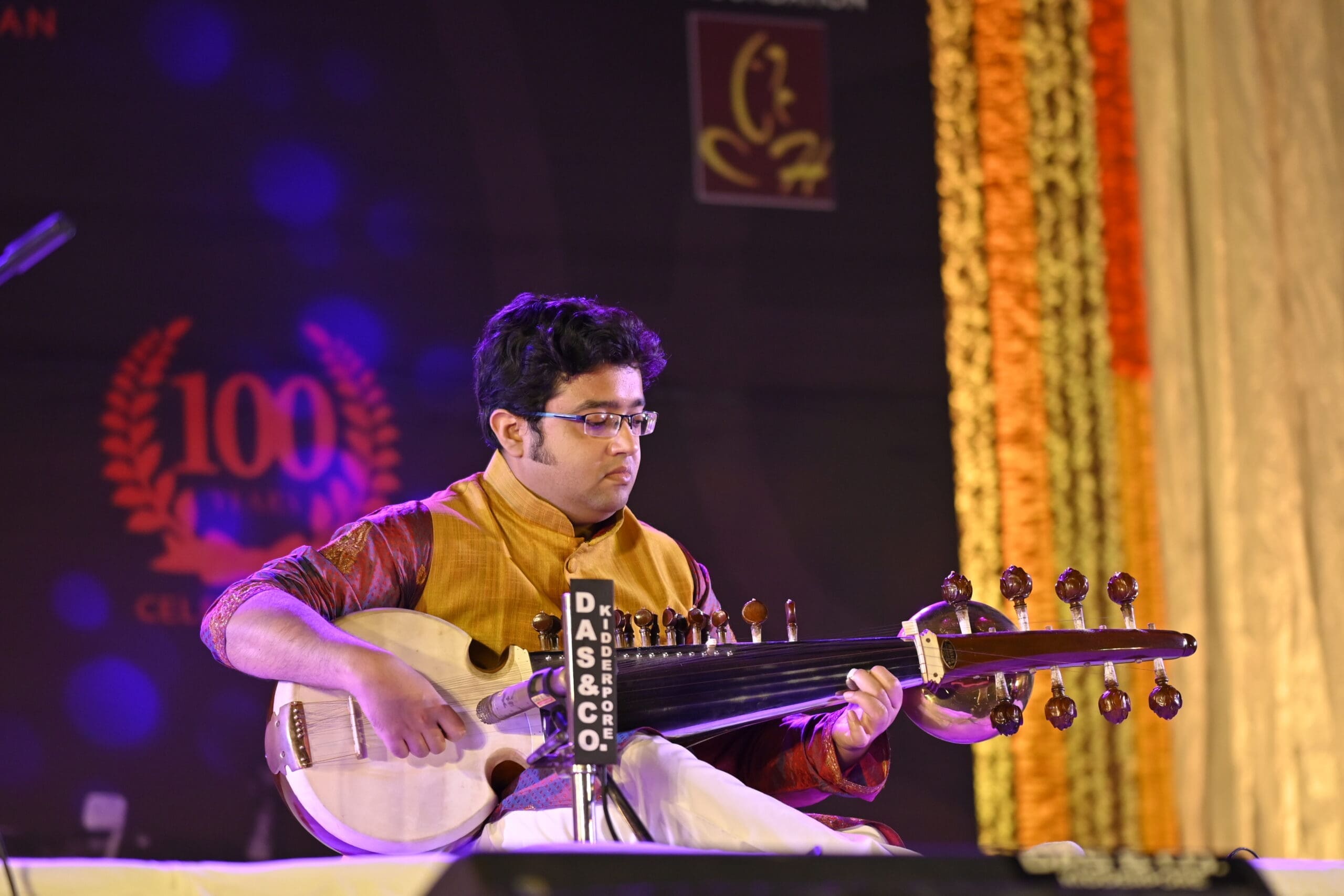
Debanjan Bhattacharjee is an Indian sarod player of the Maihar Gharana, also known as the Maihar-Senia Gharana, one of the most distinguished lineages in Hindustani instrumental music, tracing its roots to the legendary Baba Allauddin Khan. A disciple of Ustad Aashish Khan, Late Ustad Dhyanesh Khan, and Late Vidushi Ameena Perera, Debanjan has absorbed the full depth of this tradition while forging a reputation as one of the most innovative solo sarod artists working today. He is also an empanelled artist of the Indian Council for Cultural Relations (ICCR) and a graded artist of All India Radio and Doordarshan.
Born on 18th May 1986 in Ballygunge, Kolkata, Bhattacharjee completed his schooling at South Point School before going on to pursue a postgraduate degree in Electronics and Telecommunications Engineering from the Indian Institute of Engineering Science and Technology (IIEST), Shibpur, securing a First Class. Yet even as he excelled in the lecture hall, music was pulling him in an altogether different direction. He had taken up the sarod at the age of five and begun learning under Late Professor Ustad Dhyanesh Khan, son of the iconic Ustad Ali Akbar Khan, from August 1991. Trained also in Rabindrasangeet by his parents from childhood, he was steeped in Bengal’s rich musical life long before he ever stepped onto a concert stage.
Debanjan has gained worldwide recognition for his pioneering work in establishing “Dhrupad Sarod,” an innovative form of sarod recital accompanied solely by Pakhawaj instead of Tabla, comprising Dhrupad-style compositions in Dhrupad talas. He had the rare honour of performing this concept in front of Prime Minister Narendra Modi at Hyderabad House, New Delhi, and represented India as one of the youngest cultural diplomats at the largest Latin American festival, Cervantino 2015, as well as at the United Nations Congress in 2013. A President of India’s Gold Medal awardee in 2008, he was also nominated for the prestigious GIMA Awards 2012 for Best Classical Album, alongside luminaries such as Pandit Hariprasad Chaurasia and Ustad Shujaat Khan. He has since performed over 600 stage concerts across 18 countries and 110 cities worldwide.
What makes Debanjan’s artistry so compelling is the way his two worlds, engineering and music, seem to inform one another. His “Dhrupad Sarod” concept represents a genuine reimagining of how the sarod can be heard, stripping accompaniment back to the ancient Pakhawaj to draw out the meditative gravity of the Dhrupad form. He has extended this exploratory spirit further still, performing Rabindrasangeet, Agomoni songs, and Shyama Sangeet on sarod under the respective titles Sarod-e Rabi, Sarod-e Sharodiya, and Sarod-e Shyama, bridging classical rigour with the warmth of Bengali cultural tradition. In doing so, he has carved out a place entirely his own in the landscape of Indian classical music.