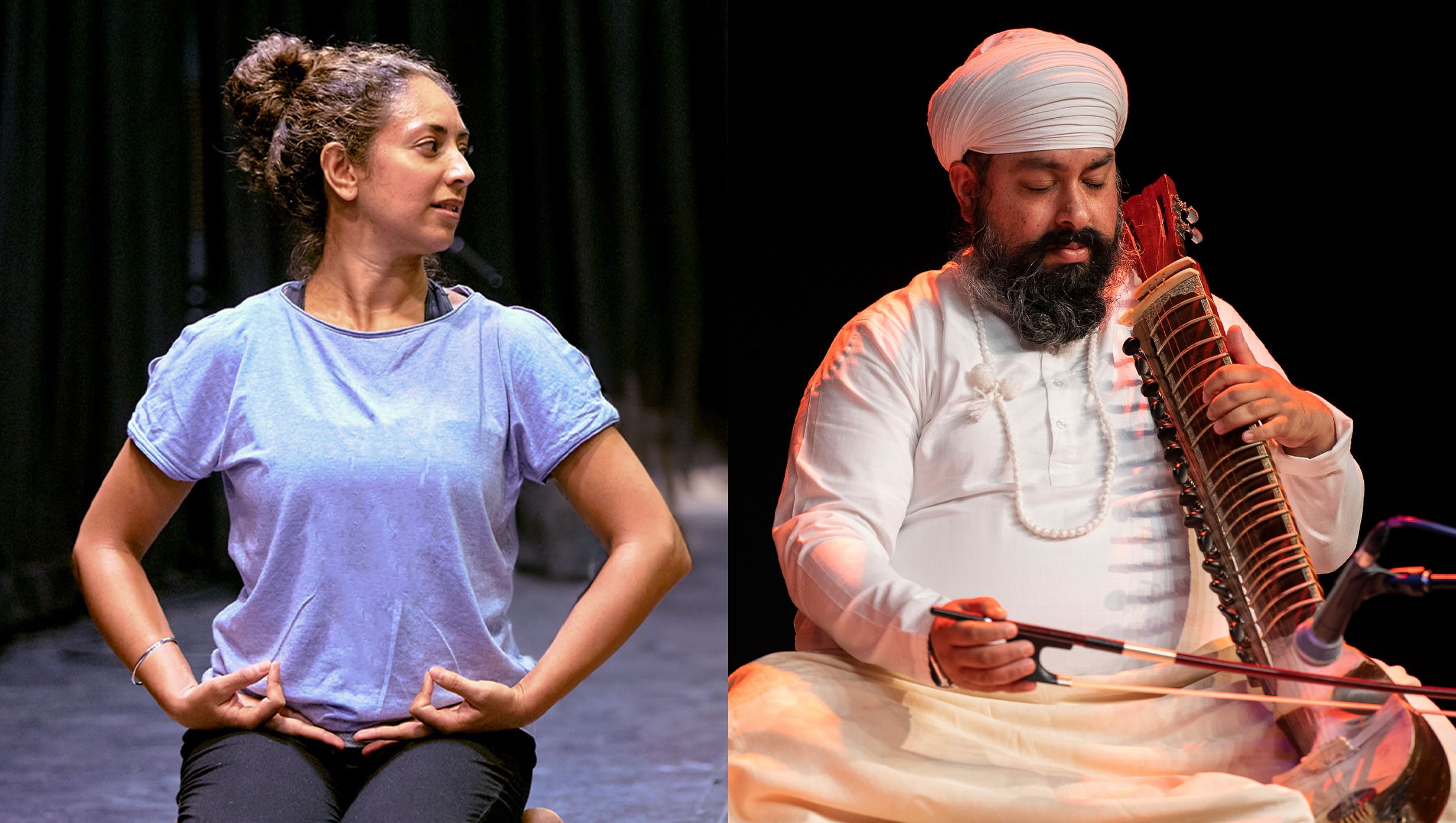
Esraj

The Esraj is a bowed string instrument from India, primarily used in Hindustani classical music. It has a long neck with sympathetic strings, a wooden body, and a horsehair bow, producing a hauntingly melodious sound. The Esraj is closely related to the Dilruba, with subtle differences in structure and tonal quality. It is often used in Sikh devotional music (Gurbani Kirtan) and was a favored instrument in Bengal and Punjab before declining in popularity during the 20th century.
The instrument has a history dating back to the 17th century, blending Persian and Indian musical influences. Over time, it became a staple in classical and semi-classical music but saw a decline with the rise of the harmonium. However, in recent years, musicians have revived interest in the Esraj, incorporating it into both traditional and fusion compositions. Legendary figures like Rabindranath Tagore helped preserve its legacy by integrating it into the music of Shantiniketan.
A few well-known contemporary Esraj players include Arshad Khan, who has captivated audiences worldwide with his expressive playing. He performed at the Darbar Festival on November 11, 2018, at Sadler’s Wells, accompanied by the skilled tabla player Shahbaz Hussain. Other notable Esraj artists include Ranadhir Roy and Buddhadev Das, who have contributed significantly to keeping the instrument alive in modern times.
Darbar believes in the power of Indian classical music to stir, thrill, and inspire. Explore our YouTube channel or subscribe to the Darbar Player to watch extended festival performances, talks, and documentaries in pristine HD and UHD quality.