
Amaan Ali Bangash & Ayaan Ali Bangash
London, EC2Y 8DS United Kingdom
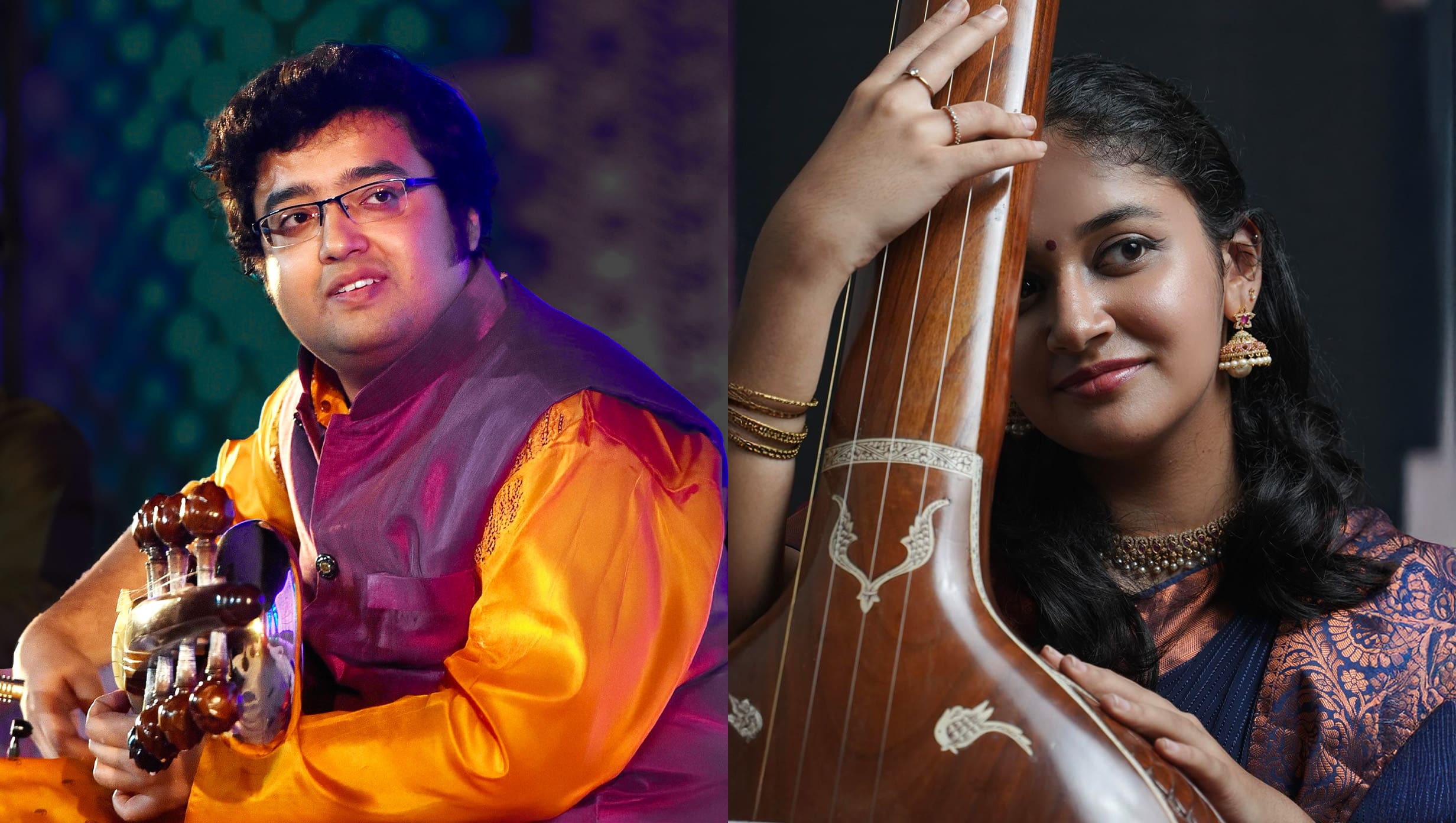
The festival closes with a raga dialogue between seventh-generation sarod brothers Amaan Ali Bangash and Ayaan Ali Bangash, joined by tabla and mridangam for a cross-tradition rhythmic finale.
This musical sibling duo are seventh-generation sarod players of the Senia Bangash lineage — sons and disciples of Amjad Ali Khan and grandsons of Haafiz Ali Khan. Both began performing at eight and have since appeared at Carnegie Hall, the Kennedy Center and the Nobel Peace Prize ceremony in Oslo.

Their duets are defined by contrast: Amaan’s fast, percussive intensity alongside Ayaan’s lyrical phrasing, with bending lines and space between the notes. When they play together, the two styles interlock rather than compete, ragas moving back and forth in a fluid, responsive exchange.
The Accompanying Artists

Behind them, an unusual pairing: Sai Giridhar on mridangam and Gurdain Rayatt on tabla — North and South Indian percussion traditions sharing the same stage. A closing concert shaped by family, dialogue and seven generations of knowledge.
Performers:
Amaan Ali Bangash: sarod
Ayaan Ali Bangash: sarod
Gurdain Rayatt: tabla
Sai Giridhar: mridangam
Stage Times:
5:30pm Doors
6-8pm First Half
Please note, stage times are approximate and subject to change.
This performance will not feature an interval






Explore our Academy Courses
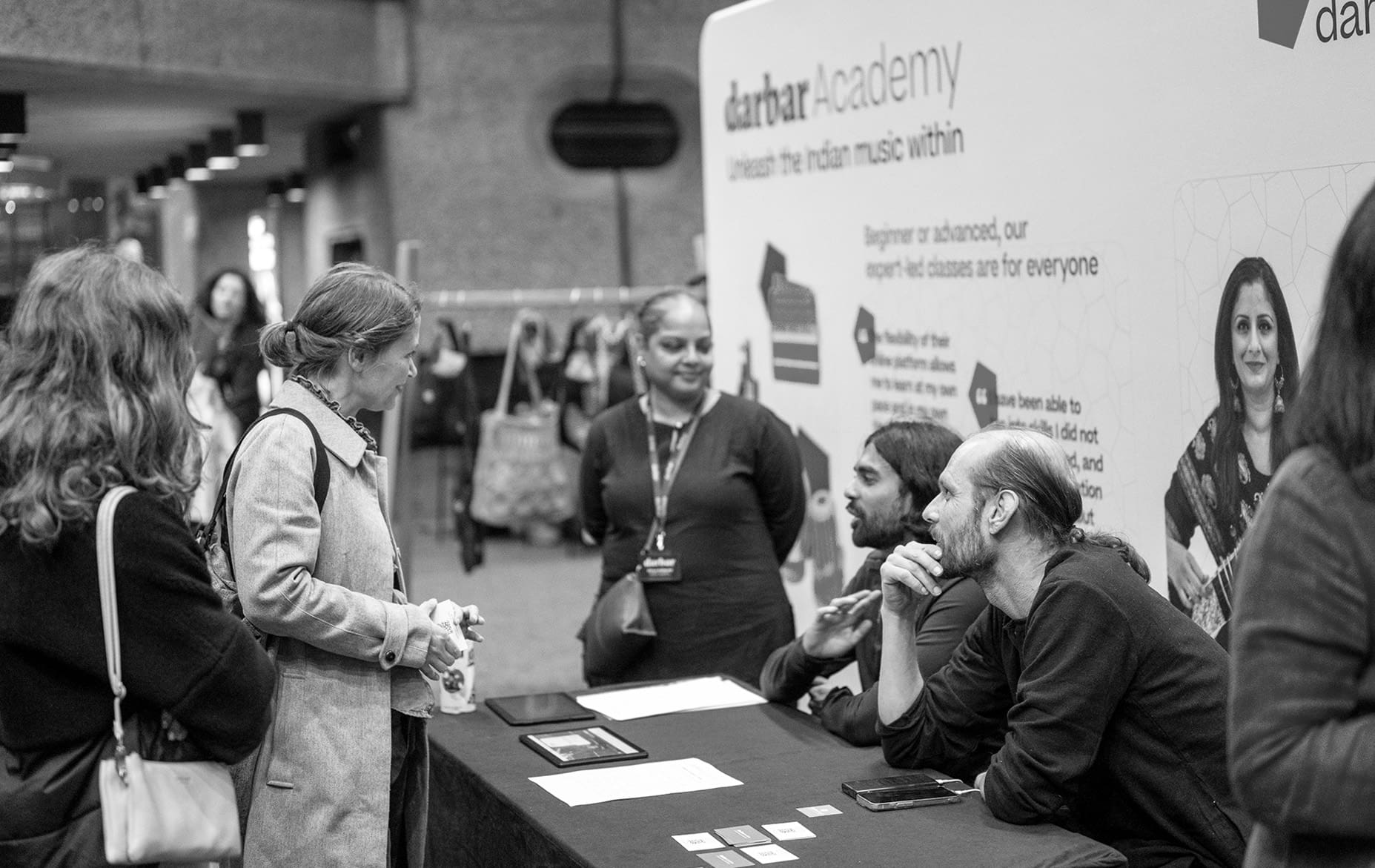
Explore all our live and on-demand music courses guided by world-class maestros. From beginners taking their first steps to advanced students refining their craft, our globally accessible platform empowers you to learn, grow, and connect deeply with the tradition of Indian classical music

Ustad Amjad Ali Khan | Megh & Miyan ki Malhar
Recorded at Darbar on Sep 18 2016, at London’s Southbank Centre - Amjad Ali Khan (sarod) - Kumar Bose (tabla) - Anindo Chatterjee (tabla) Raag Megh; Thaat: Kafi; Samay: Monsoon Raag Miyan ki Malhar; Thaat: Kafi; Samay: Night or Monsoon “If you don’t give a good treatment to a raga, then the raga can curse you, it can feel unhappy with you…” (Amjad Ali Khan) Amjad Ali Khan’s illustrious career has lasted almost seven decades since his debut at the age of six. His Bangash lineage ancestors gave shape to the modern sarod, and he first learned it from his father Hafiz Ali Khan, going on to master both the slides of gayaki ang [singing style] and the rapid picking of tantrakari ang [instrumental style]. Widely recognised as his instrument’s leading modern master, Amjad sees his music as an attempt to create peace as well as beauty. He credits his father with opening his eyes to the universality of spiritual practice, and went on to played at the 2014 Nobel Peace Prize ceremony. He now tours to worldwide acclaim with his sarod-playing sons Amaan and Ayaan. The Malhar family of ragas are associated with rejuvenation, heroism, and growth, and are said to summon monsoon rains if sung correctly. Legend has it that Emperor Akbar once asked Miyan Tansen to sing Deepak, the light-bringing raga, which caused all the lamps near him to ignite and burn so brightly that Tansen’s body began to be scorched. Later, it was his daughter, Saraswati, who sang Miyan Ki Mallhar and doused the fire. Miyan Ki Malhar is said to be Tansen’s own variant of the basic Malhar structure. Both use Kafi as their base scale (SRgmPDnS), but Tansen’s version takes a shudh [natural] Ni in ascent before reverting to a komal [flat] Ni for the descent - some say that the melodic contrast between the two Ni swaras helps clouds to descend. Pa and Sa form a strong core as the vadi and samvadi [king and queen notes]. Some associate the raga with the kadam tree, used for perfume and ornamental craftwork. Subscribe to the Darbar Player to access the full, uncut performance.