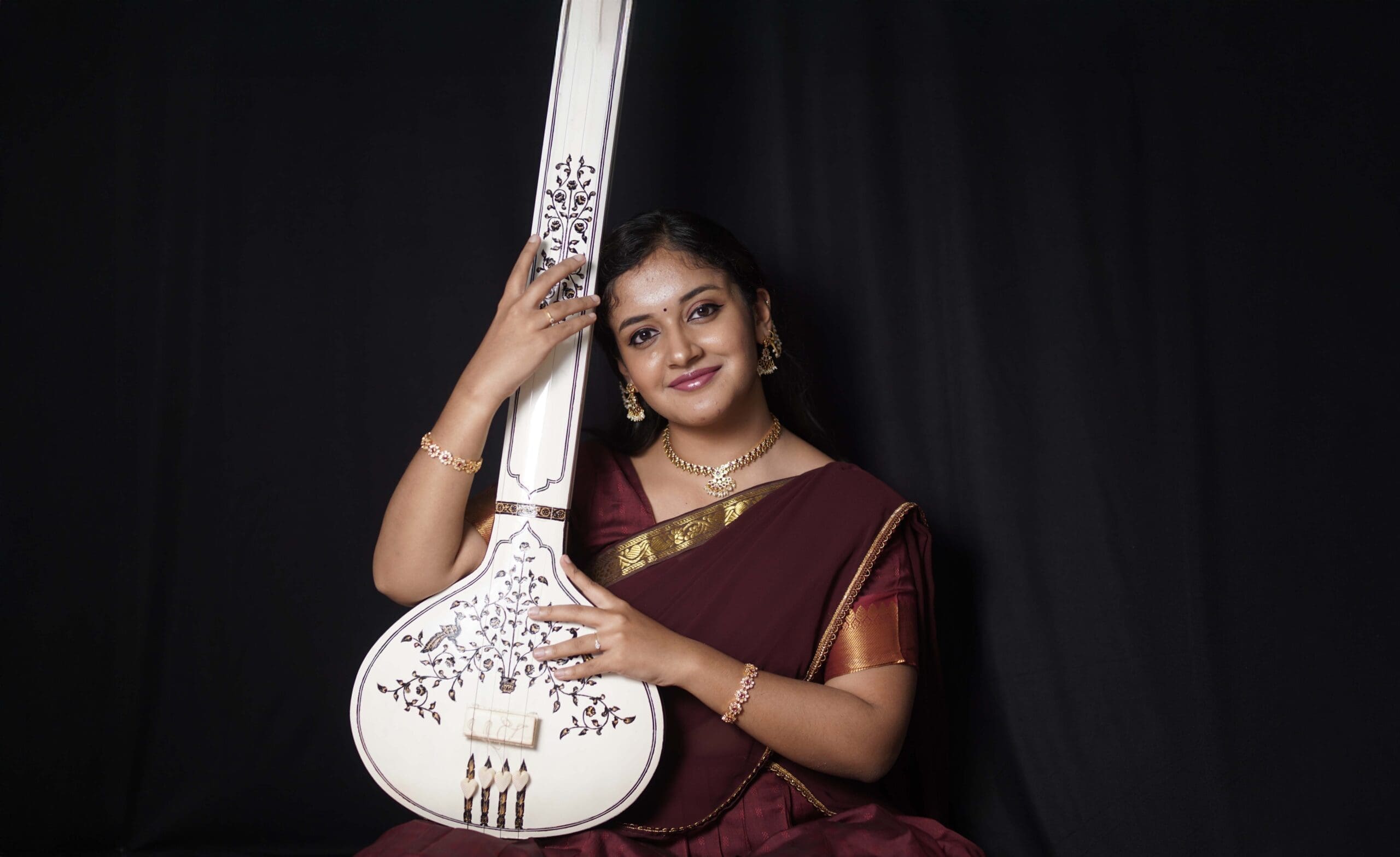
Swarmandal

The Swarmandal is a plucked string instrument used primarily in Indian classical vocal music to enhance melodic expression and create a rich, resonant drone. Shaped like a small harp or zither, it typically features between 21 to 36 strings tuned to the notes of a specific raga. Vocalists lightly strum the Swarmandal before or during a performance, producing a shimmering cascade of notes that sets the tonal mood and provides a harmonic backdrop to the vocal line.
Historically, the Swarmandal is believed to have evolved from the ancient Indian veena family and was influenced by similar instruments from Persian and Central Asian traditions. While not commonly used in instrumental music, it gained popularity in the 19th and 20th centuries as an accompaniment for khayal and thumri singers in the Hindustani tradition. The instrument’s ability to subtly support a vocalist’s improvisation without overpowering it made it a favored tool for enhancing the emotional depth of a performance.
Renowned vocalists such as Pandit Bhimsen Joshi, Kishori Amonkar, and Ustad Rashid Khan have used the Swarmandal to great effect in their performances. Kaushiki Chakraborty uses a Swarmandal during her performance at Darbar Festival 2021 with Shahbaz Hussain, Milind Kulkarni and Mithila Sarma. The instrument’s ethereal sound complements the intricacies of raga development and helps create a meditative atmosphere. Though less visible than other instruments, the Swarmandal remains a cherished component of classical vocal music, symbolising both tradition and the intimate connection between melody and emotion.

Darbar believes in the power of Indian classical music to stir, thrill, and inspire. Explore our YouTube channel or subscribe to the Darbar Player to watch extended festival performances, talks, and documentaries in pristine HD and UHD quality.