


Prathap Ramachandra, born and raised in Bangalore in 1980s India, is a London-based international percussionist deeply rooted in the Carnatic tradition. Beginning his training at the age of two under his elder...


One of the most ancient drums of India, the mridangam, which literally means ‘body of clay,’ originated in South India. To this day, it remains the leading percussion accompaniment for Carnatic music...

The mother of all North Indian drums, the pakhawaj is also known as the mridang, the generic word for any barrel-shaped drum. A two-headed drum descended from the much older South Indian...

The ghatam is a South Indian drum resembling a porous earthenware or clay pot, a common household object in North and South India used for cooling drinking water. In North India, it...

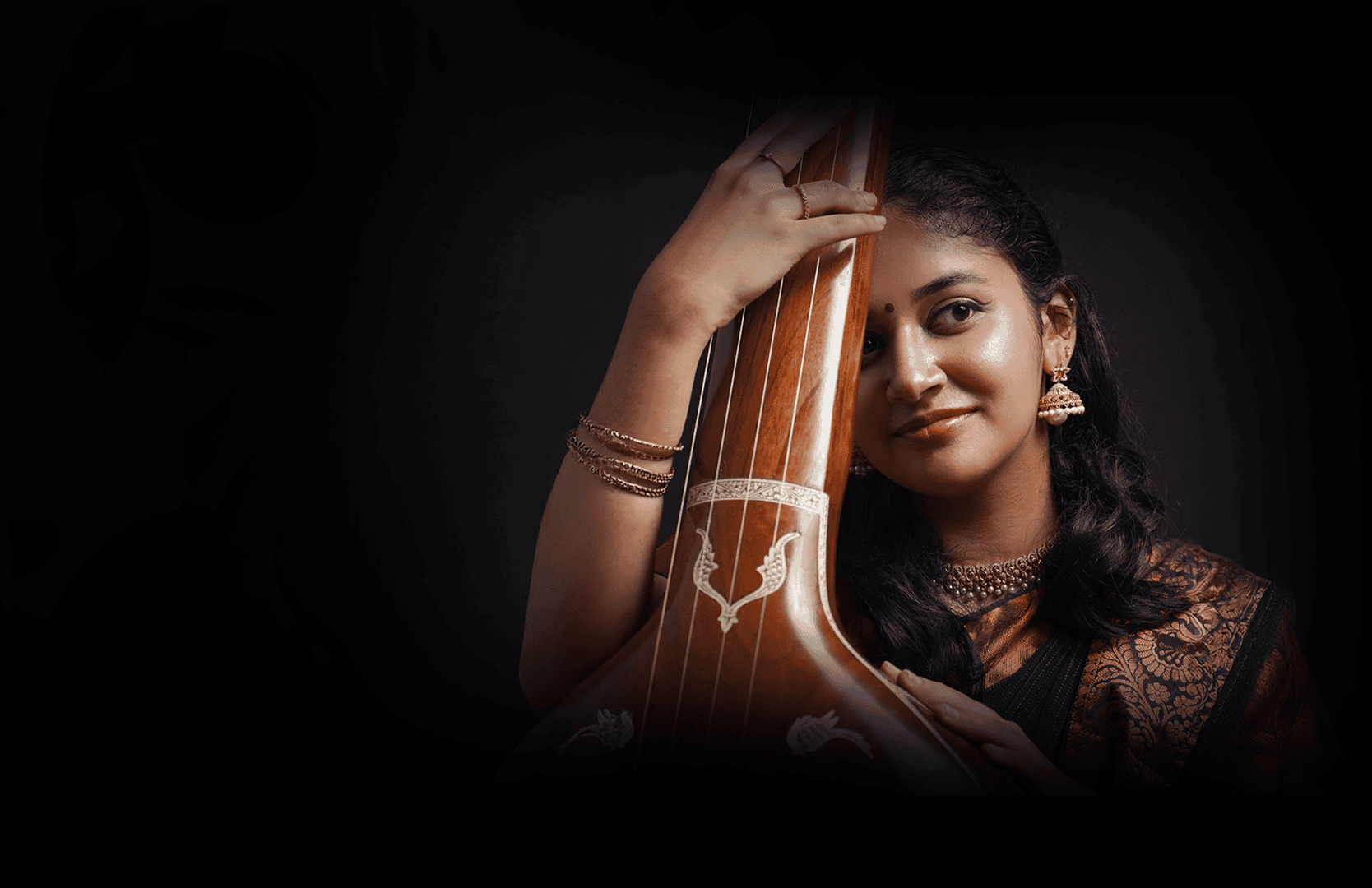


The violin is one of the most important instruments in Western classical music, owing not only to a unique strength of tone that stands out among other instruments, but also because of...

The veena is a large plucked lute and one of India’s oldest instruments, with a recorded history going back to about 1500 BC. While it is getting rarer in North India, the...

The veena, also known as the been in North Indian languages, is a large plucked lute. It is undoubtedly one of India’s oldest instruments, dating from around the 1st millennium BC –...

The Gundecha Brothers, Umakant and Ramakant, were among the foremost vocalists of the Dhrupad tradition in Indian classical music, representing the Dagar vani style. Trained under the legendary Ustad Zia Fariduddin Dagar...

The present-day format of Carnatic music performance is thought to have grown out of the tremendous flowering, especially of music and dance, in the district of Thanjavur during the reign of King...

Like North Indian music, Carnatic or South Indian music is also underwritten by raga (melodic structure) and tala (rhythmic cycle). Although improvisation plays an important role, compositional vocal music remains the dominant...