Ustad Asad Ali Khan
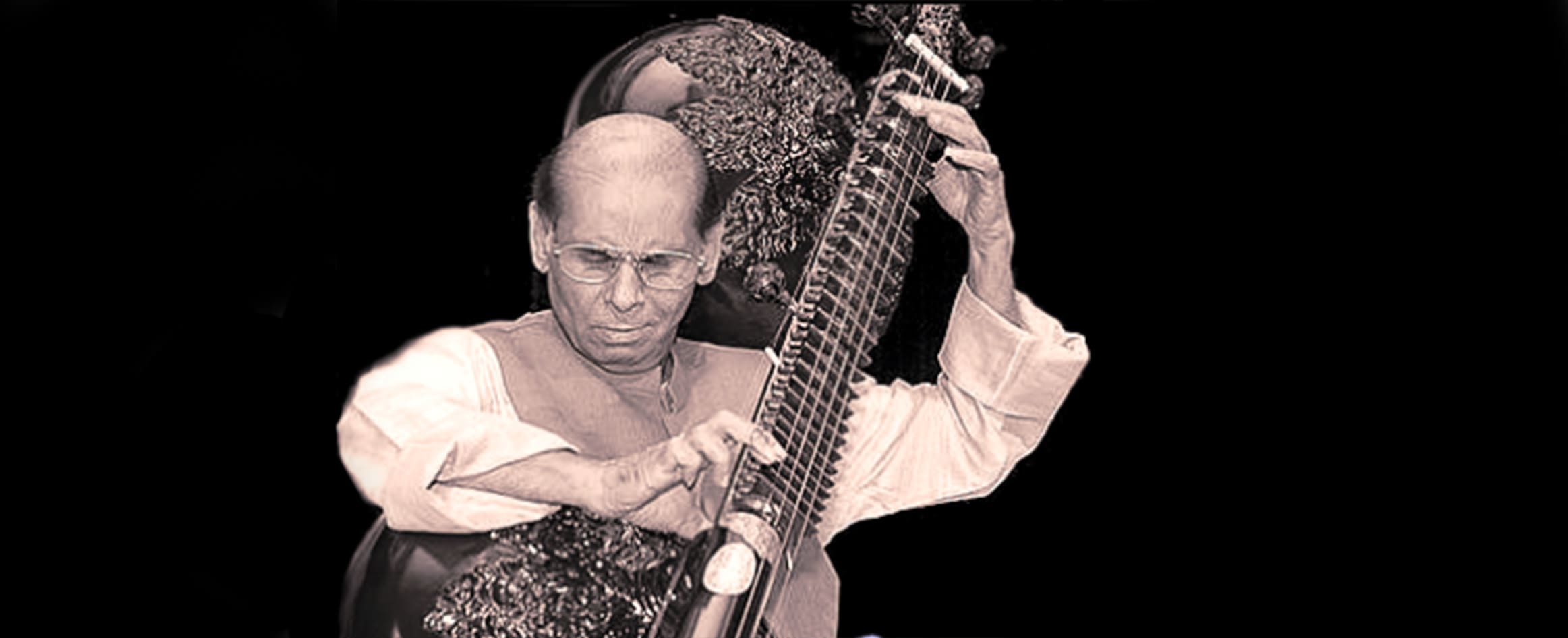
Ustad Asad Ali Khan (1 December 1937 – 14 June 2011) was one of the last great masters of the rudra veena, carrying forward the intricate Khandarbani tradition. Born in Alwar, Rajasthan into a seventh-generation beenkar family, he was trained rigorously from age six by his father, Ustad Sadiq Ali Khan. Rising to prominence with unmatched technical precision and meditative depth, he became known as the last true exponent of the ancient rudra veena tradition.
Awarded the Padma Bhushan in 2008 and the Sangeet Natak Akademi Award in 1977, Khan’s career featured numerous national broadcasts, concerts, and international tours, sharing the veena’s rare timbre with audiences in Europe, America, Afghanistan, and beyond. He served as faculty at Delhi University and All India Radio, and later at Bharatiya Kala Kendra, while also teaching privately. Collaborating in solo recitals and lecture-demonstrations, he became known for astonishing alap, jor, and jhala passages that highlighted the veena’s spiritual resonance.
A devoted guru, Ustad Asad Ali Khan’s legacy lives on through disciples like his son Zaki Haidar, German-born Carsten Wicke, French-Tunisian Heikel Ben Mlouka, and India’s Jyoti Hegde—who has performed at the Darbar Festival, bringing the rudra veena tradition to new audiences and contexts. His insistence on rigorous technique, tonal purity, and preservation of Khandarbani repertoire ensured the survival of a nearly extinct instrument. Today, his students continue to evoke his spiritual artistry on international stages, safeguarding the veena’s sacred legacy for future generations.
Darbar believes in the power of Indian classical music to stir, thrill, and inspire. Explore our YouTube channel or subscribe to the Darbar Player to watch extended festival performances, talks, and documentaries in pristine HD and UHD quality.